Created by Wrights & Sites, working with the visual artist Tony Weaver (96 pages, full colour, ISBN-13: 9780954613006). Launched in 2003.
Funded by the Local Heritage Initiative, Arts Council England and Exeter Arts Council.
An Exeter Mis-Guide is like no other guide you have ever used before. Rather than telling you where to go and what to see, it gives you the ways to see the Exeters no one else has found yet. An Exeter Mis-Guide is both a forged passport to your 'other' city and a new way of travelling a very familiar one. An essential part of the toolkit of any 21st Century Exeter survivor.
This publication was the result of three years of disrupted walking by Wrights & Sites, using the city of Exeter as our laboratory. Through extended drifts, alone and with invited individuals and groups, at different times of day and year, the initial reconnaissance process aimed to:
• playfully explore existing spatial models generated by municipal organisations, the heritage and tourism industries, and different academic/artistic discourses;
• generate a series of frameworks for activities in specific sites and landscapes within the city of Exeter, allowing the writer and walker to become partners in ascribing significance to place.
An Exeter Mis-Guide has been taught in a number of university theatre/drama departments. Its focus on spatial practices means that it has also been taught across disciplines, for example, in the departments of Geography at the University of Durham, Sociology at Manchester Metropolitan University, Art History at Shanghai University (China) and Cinema & Media at Carleton College (Minnesota, USA). It has also been used to introduce the subject of Geography to Exeter's primary school children.
Mis-guide tourism is the latest of all the forms of experimental tourism. And it has an unlikely home town: Exeter. - The Times, 13 September 2003
With the book tucked in pocket I felt entitled even licensed to poke around where it is normally discouraged even forbidden to enter. I found this an imaginative and very open invitation. - liveartmagazine, November 2003
The Mis-Guide succeeds by putting into writing small strategies, or jumping-off points, that seek to stimulate creativity in a society that seems to prefer spoon-fed entertainments and over-the-top spectacles. The graciousness with which this enterprising group of walking artists have invited us to do more than just admire, but to create art ourselves and rediscover the social function of the city, is truly an accomplishment. - Reconstruction: Studies in Contemporary Culture, Winter 2005
Images: Stephen Hodge, Simon Persighetti, Phil Smith, Cathy Turner, Tony Weaver.

Physical mock-up #1

Physical mock-up #2
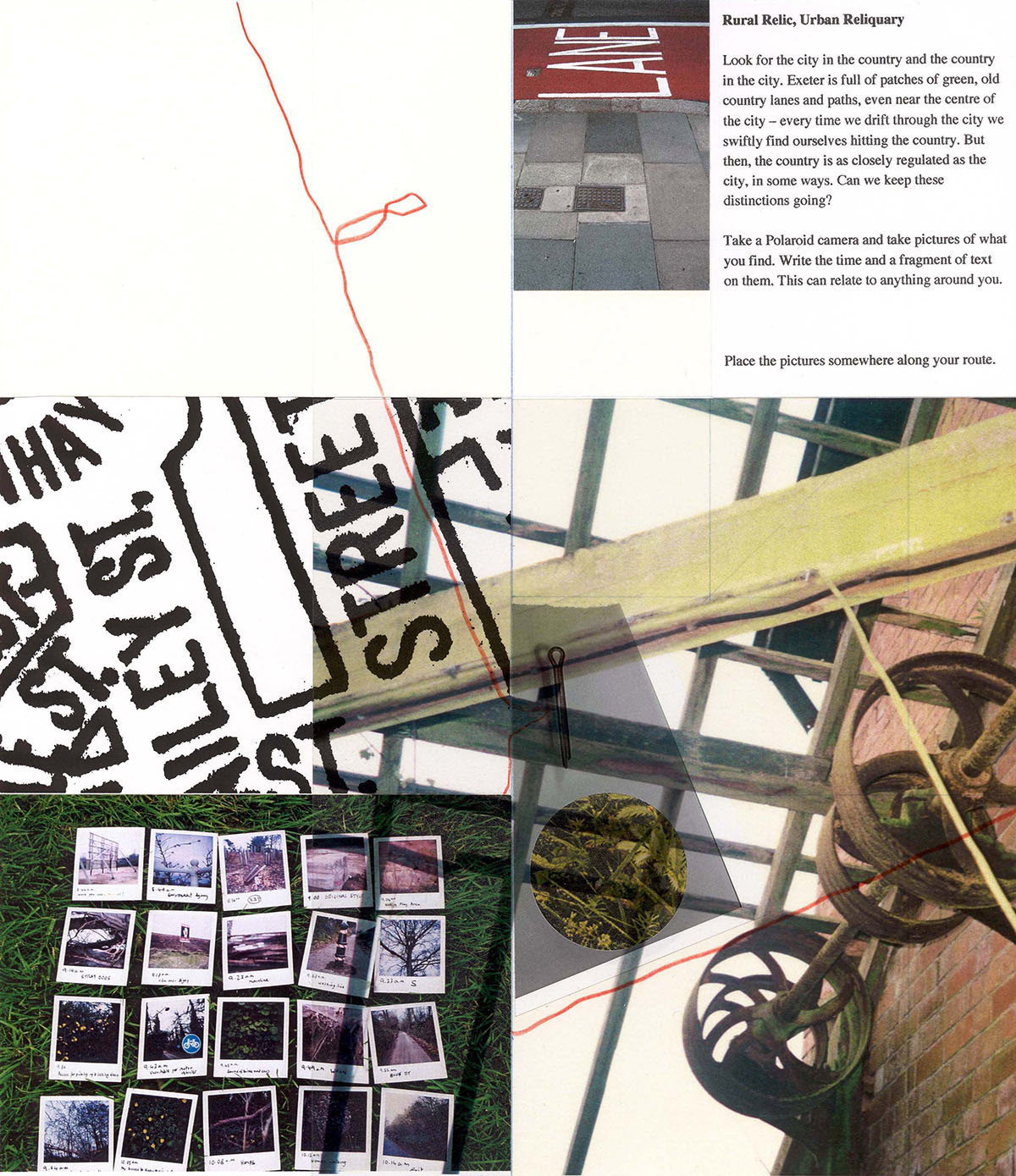
Physical mock-up #3
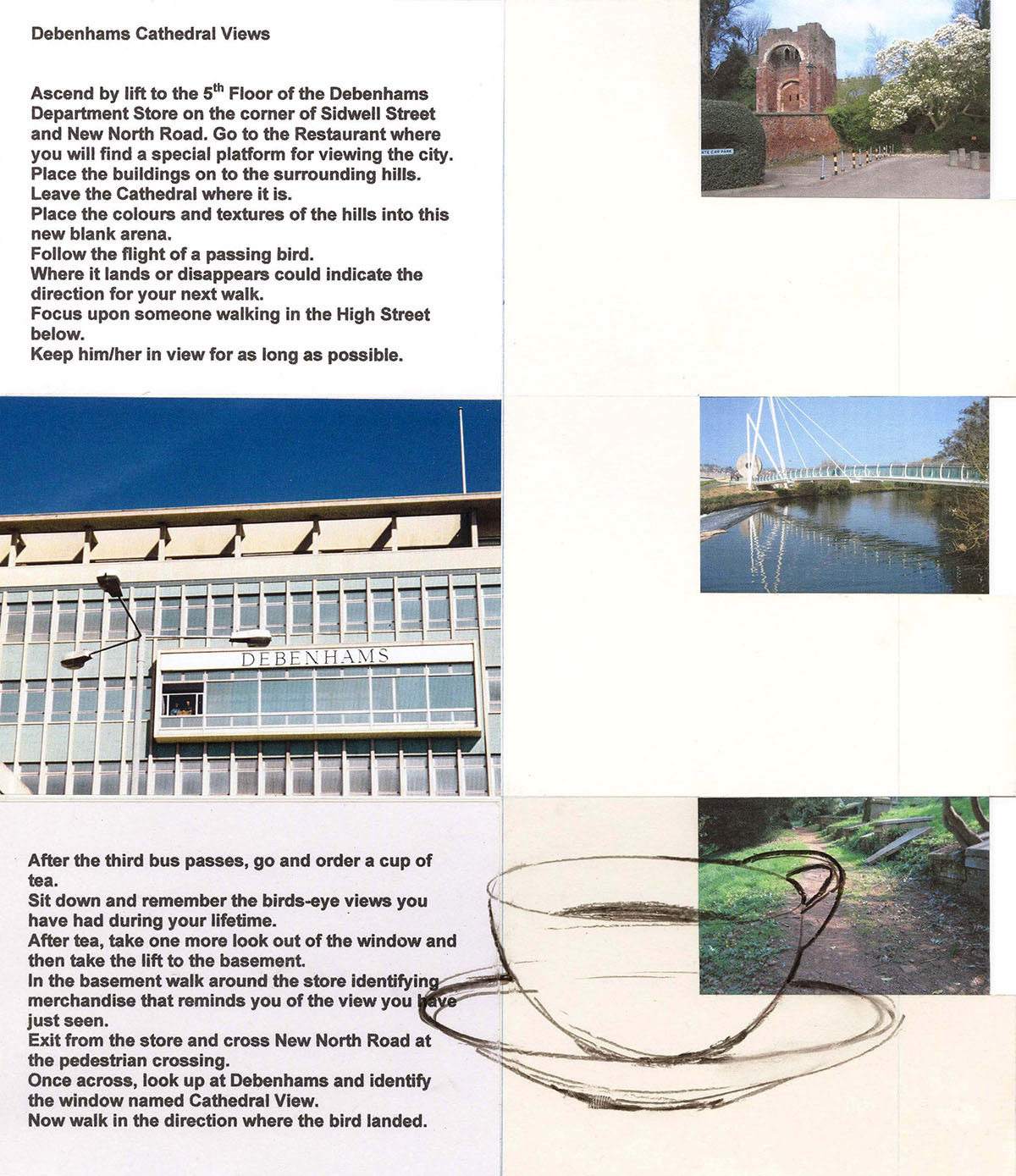
Physical mock-up #4

Physical mock-up #5
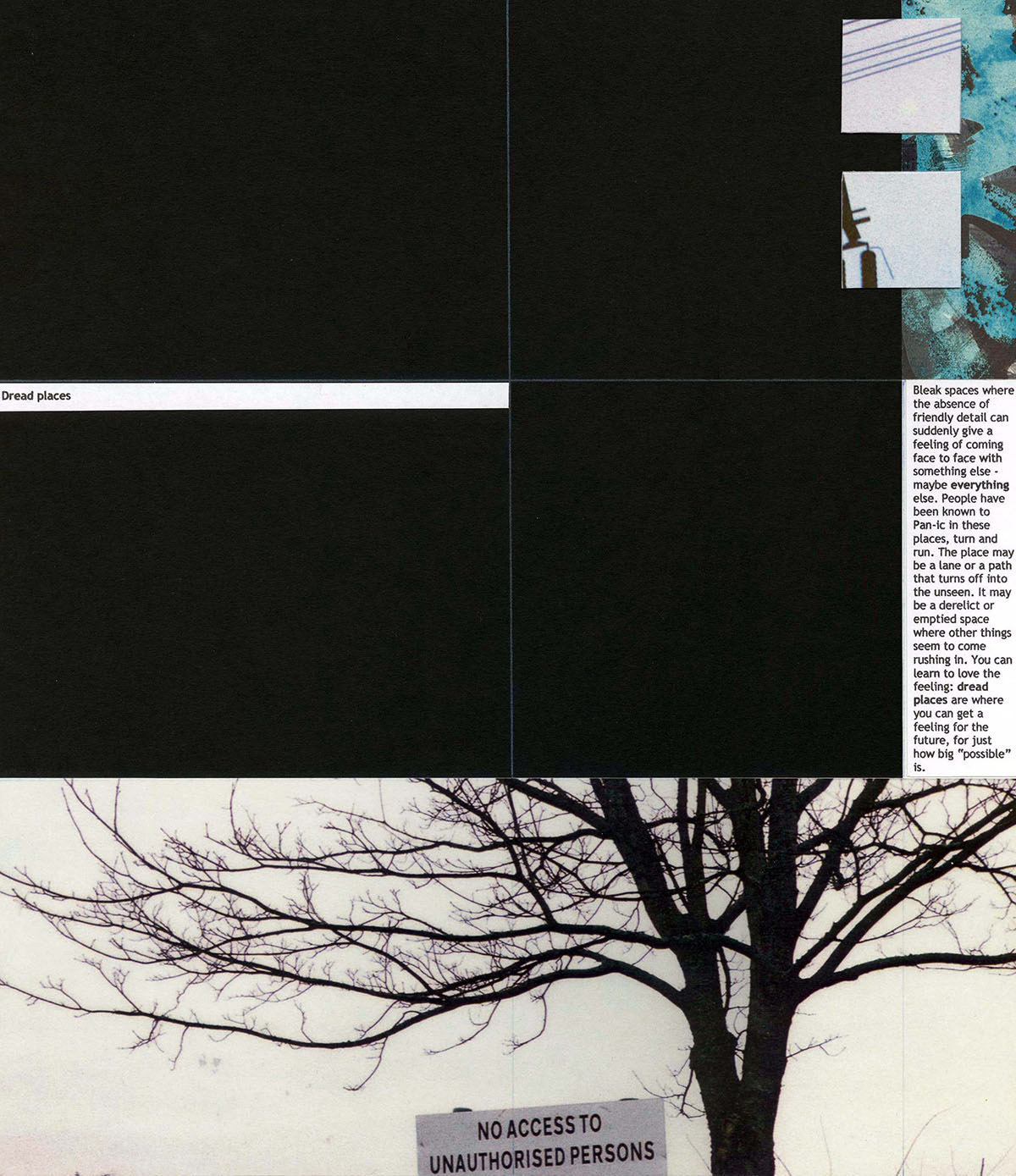
Physical mock-up #6

'z-worlds' reconnaissance drift

The book cover

Pages 2-3

Pages 30-31
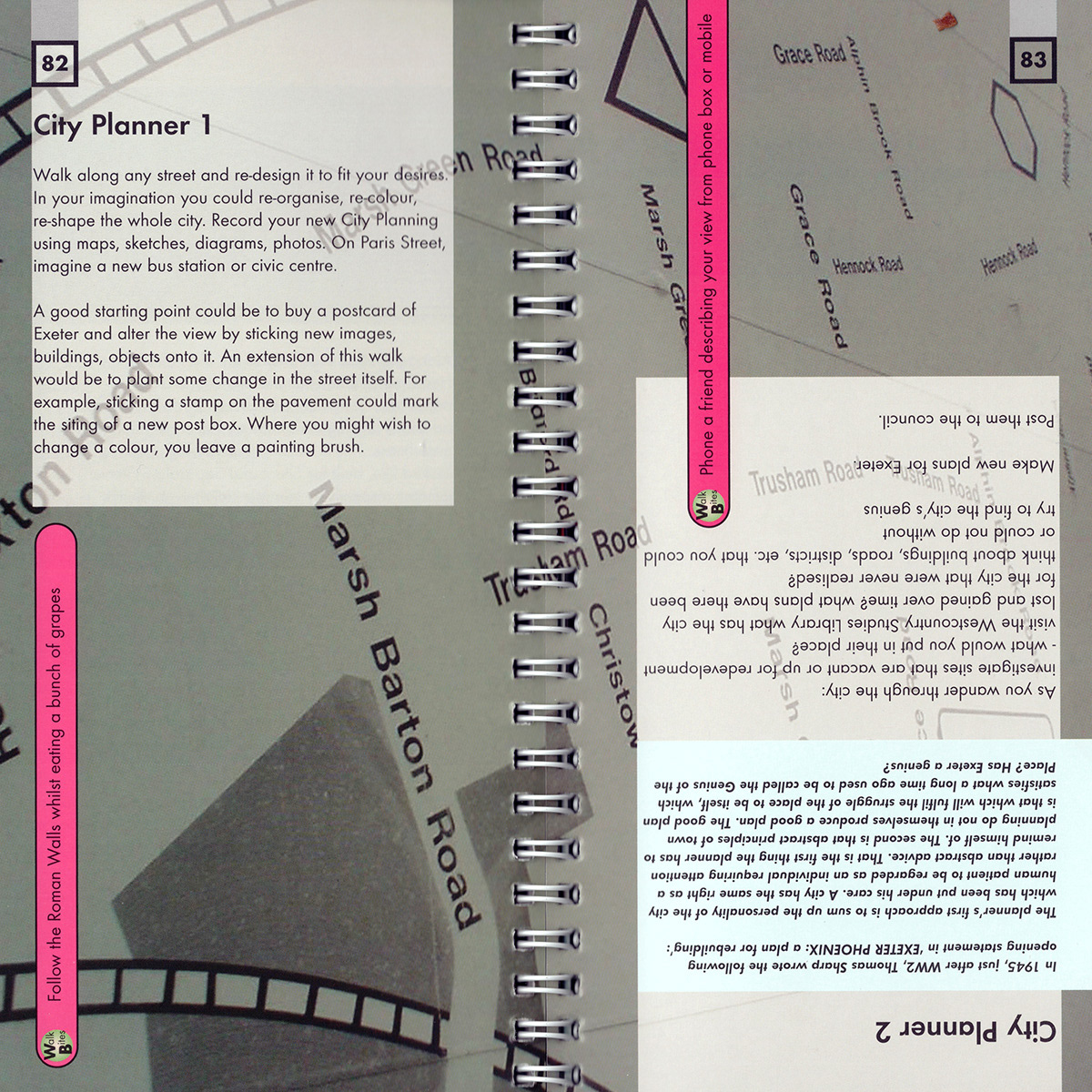
Pages 82-83
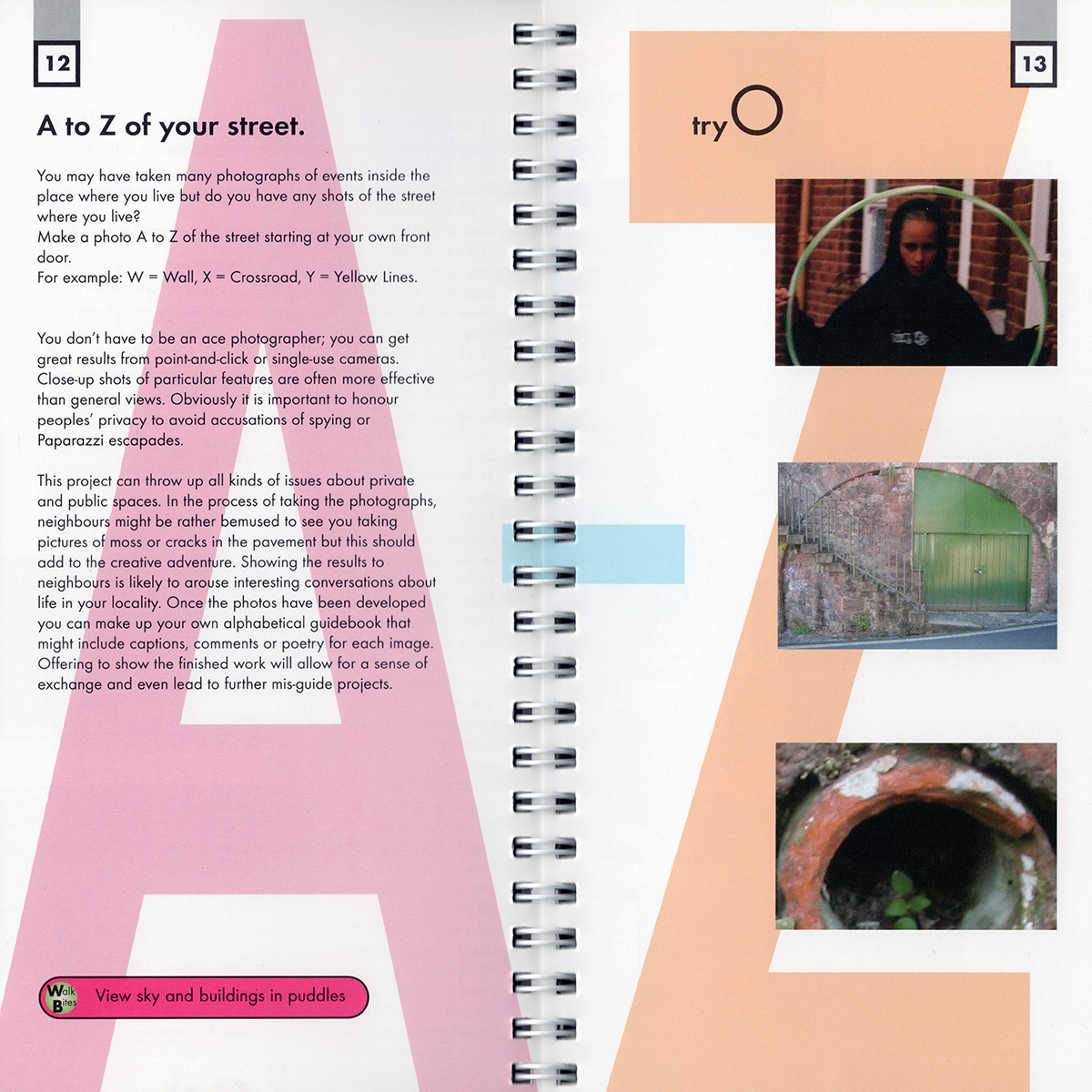
Pages 12-13

Pages 34-35
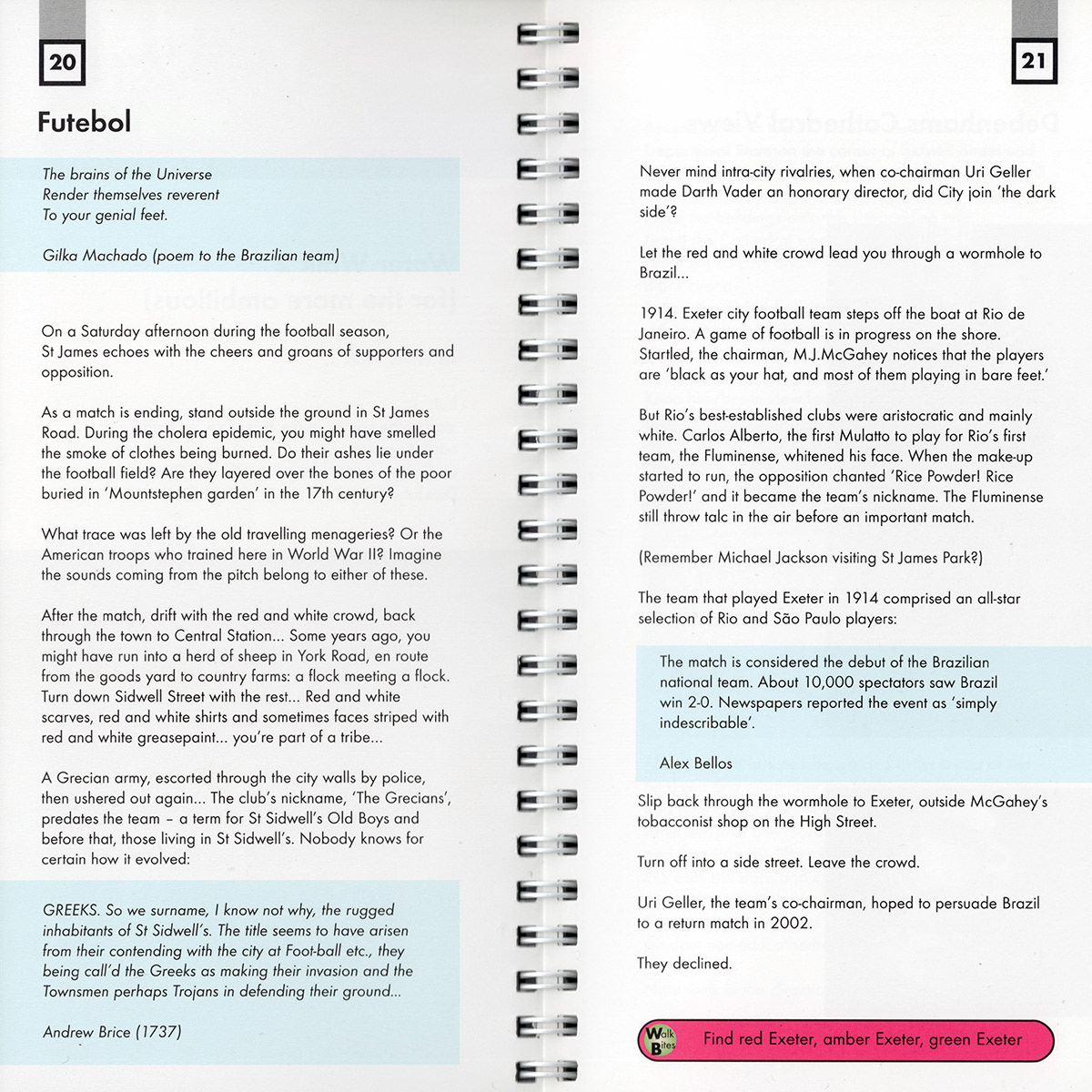
Pages 20-21

Pages 64-65

Pages 36-37
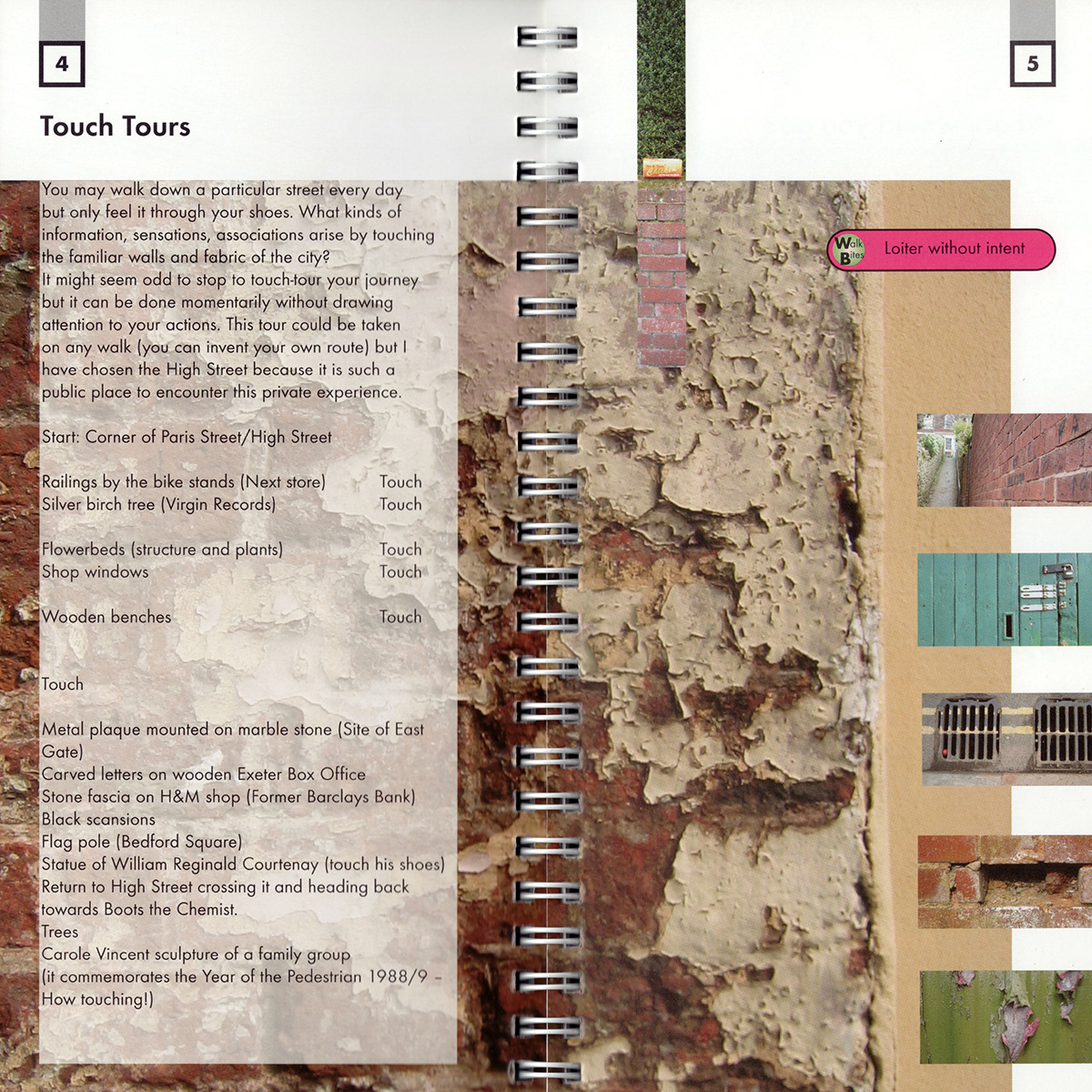
Pages 4-5

Pages 40-41
Associated personal outcomes
The Lonely Planet Guide To Experimental Travel
One of my walks from An Exeter Mis-Guide was case-studied in this Lonely Planet Guide in 2005. The book contained forty examples of experimental travel and was authored by Rachael Anthony and Joël Henry.
On An Exeter Mis-Guide
I gave a public presentation about An Exeter Mis-Guide at 'Live Platform', a live art symposium at Newlyn Art Gallery (2003).