
Outline
Exeter (UK), 2013-2014. Leeds (UK), 2016.
Commissioned by Kaleider and Compass Festival, and supported using public funding by the National Lottery through Arts Council England and Exeter City Council.
Where to build the walls that protect us is an opportunity for us all to imagine a future city. Our city of Exeter. Our city of Leeds. Our city of wherever. An architect or planner might call this sort of process a ‘charrette’ – a term that's used to describe an intensive, collaborative enquiry that seeks to solve a complex design issue. Perhaps that sounds rather dry and dusty, but you should be assured that this is going to be an exercise in serious play. We’ll try not to get too distracted by Utopian visions. Or to worry too much about logistics. But, with one eye on the persistent fiscal crisis and the challenges of climate change, and the other on Hope, let’s look again at the fundamental fabric of our city and envisage it afresh.
Taking its momentum from major floods in Exeter and Leeds, this work explored new, collaborative models for imagining future cities. It took the form of socially-engaged live art in the public realm. The core output was framed as a 'charrette': an intensive, collaborative enquiry that seeks to solve a complex design issue. The work drew on relational, spatially-oriented methods, exploring four future-facing themes essential to urban development ('terrain and climate', 'buildings and the life between them', 'industry and commerce', and 'mobility and communications').
Images: Stephen Hodge.

Where to build the walls that protect us #1
A 'charrette' in search of a future Exeter (4 x 6-hour reconnaissance excursions)
This first Research & Development phase of the work comprised 4 x 6-hour reconnaissance excursions dotted throughout the autumn of 2013. They wove through the city, playfully exploring the keys themes of terrain and climate, buildings and the life between them, industry and commerce, and mobility and communications. As they travelled, participants encountered experts (climatologists, planners, community leaders and long-term residents), gathered material, and contributed ideas to the on-going planning enquiry.
Images: Exeter Express & Echo, Robert Darch, Jessica Lennan.

Exeter Express & Echo newspaper article

Reconnaissance Excursion #1: exploring Dr Mark McCarthy’s Vitruvian Lego model

Reconnaissance Excursion #1: the Roman city wall from King Athelstan’s tower
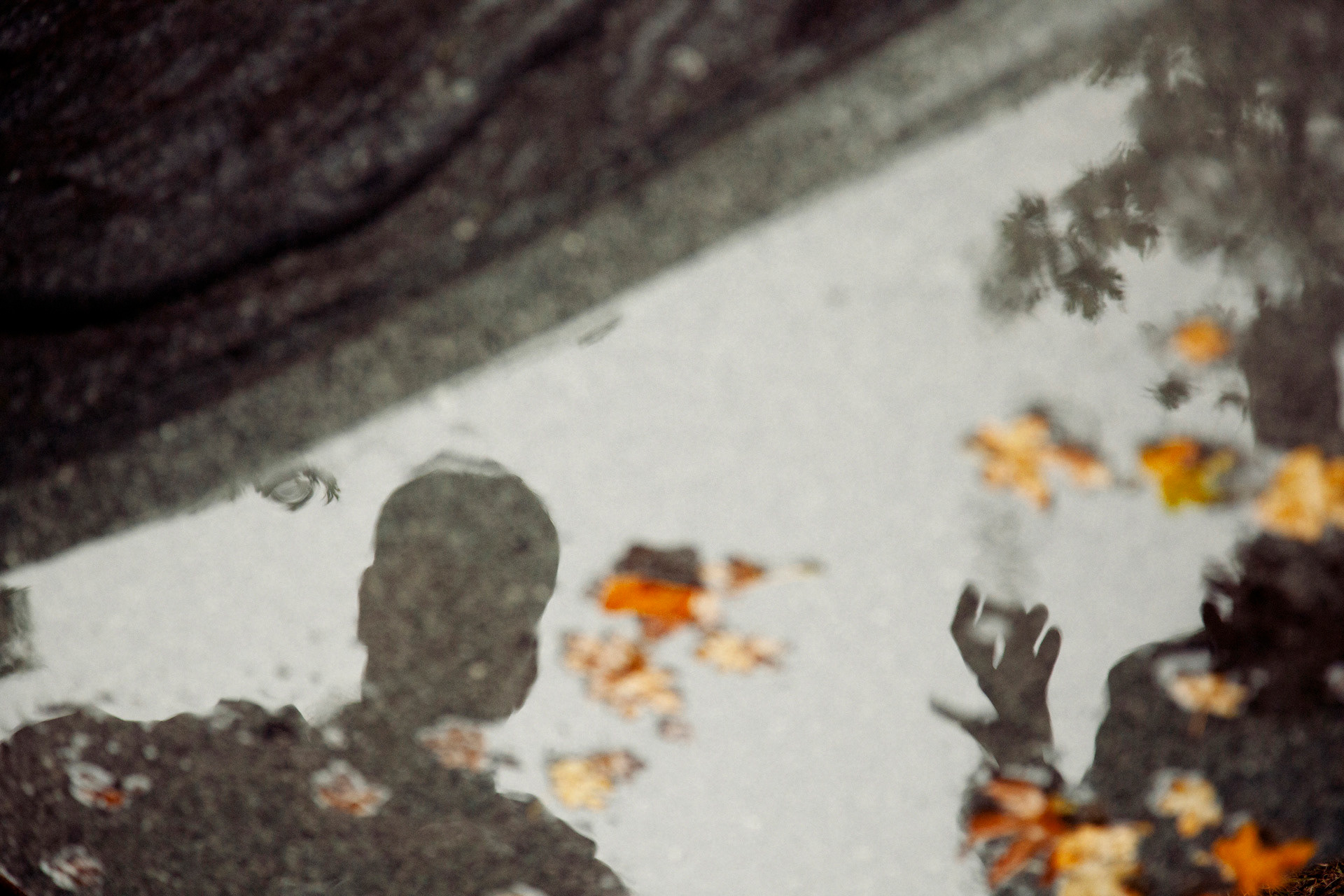
Reconnaissance Excursion #1: Professor Tim Lenton reflected in a storm puddle

Reconnaissance Excursion #2: participants encounter ‘expert-resident’ Maeve Creber

Reconnaissance Excursion #2: examining Caleb Hedgeland’s 1769 model of Exeter
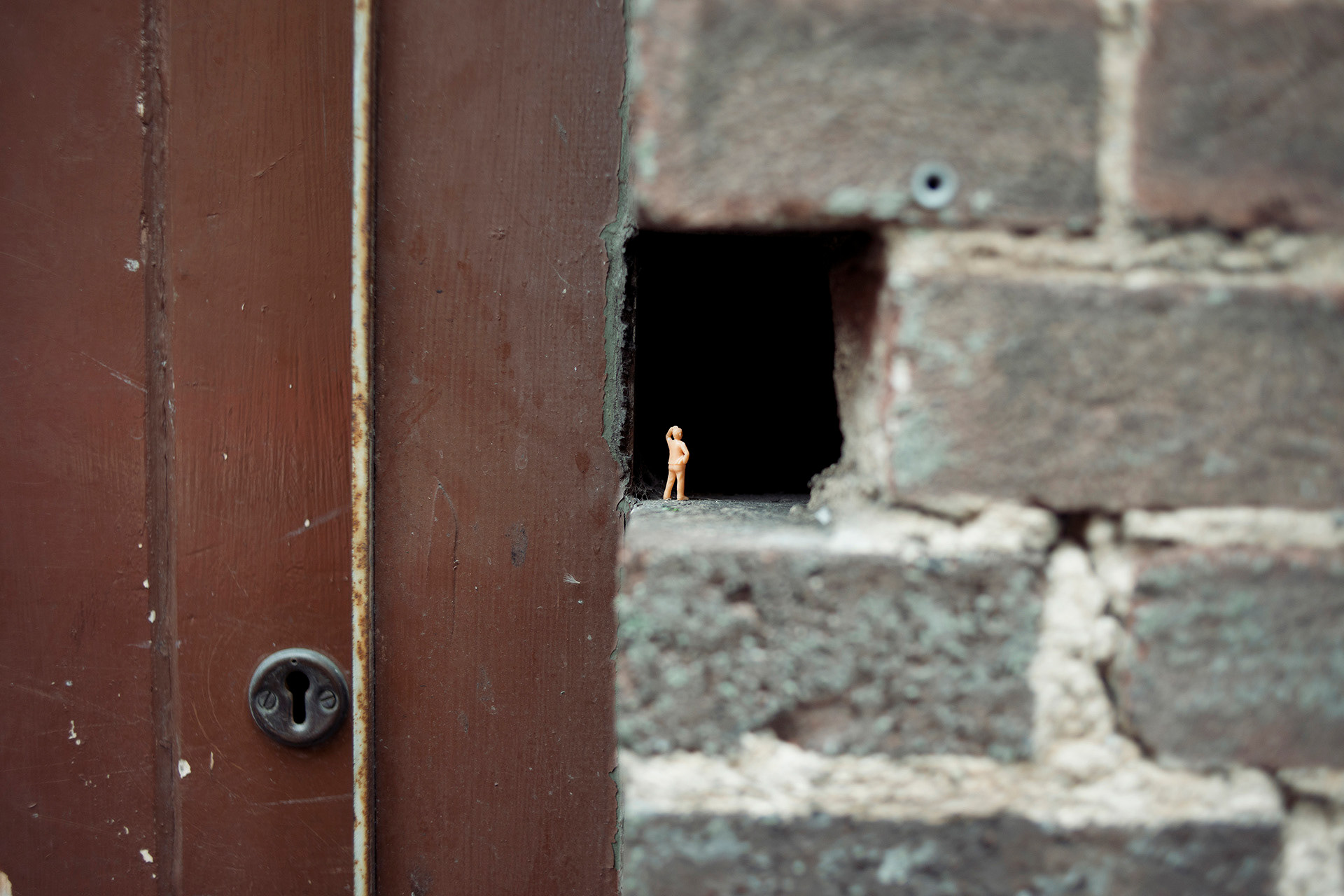
Reconnaissance Excursion #2: exploring the body and the built environment

Reconnaissance Excursion #2: the future centre of the Devon newtown of Cranbrook

Reconnaissance Excursion #3: on the way to Exeter’s Central Business District

Reconnaissance Excursion #3: provisional model-making at the Kaleider Studios

Reconnaissance Excursion #4: visiting ‘The House That Moved’ at Exeter’s West Gate

Reconnaissance Excursion #4: on the train from central Exeter to the Industrial Estate

Reconnaissance Excursion #4: locating a vantage point at Exeter Services near the M5
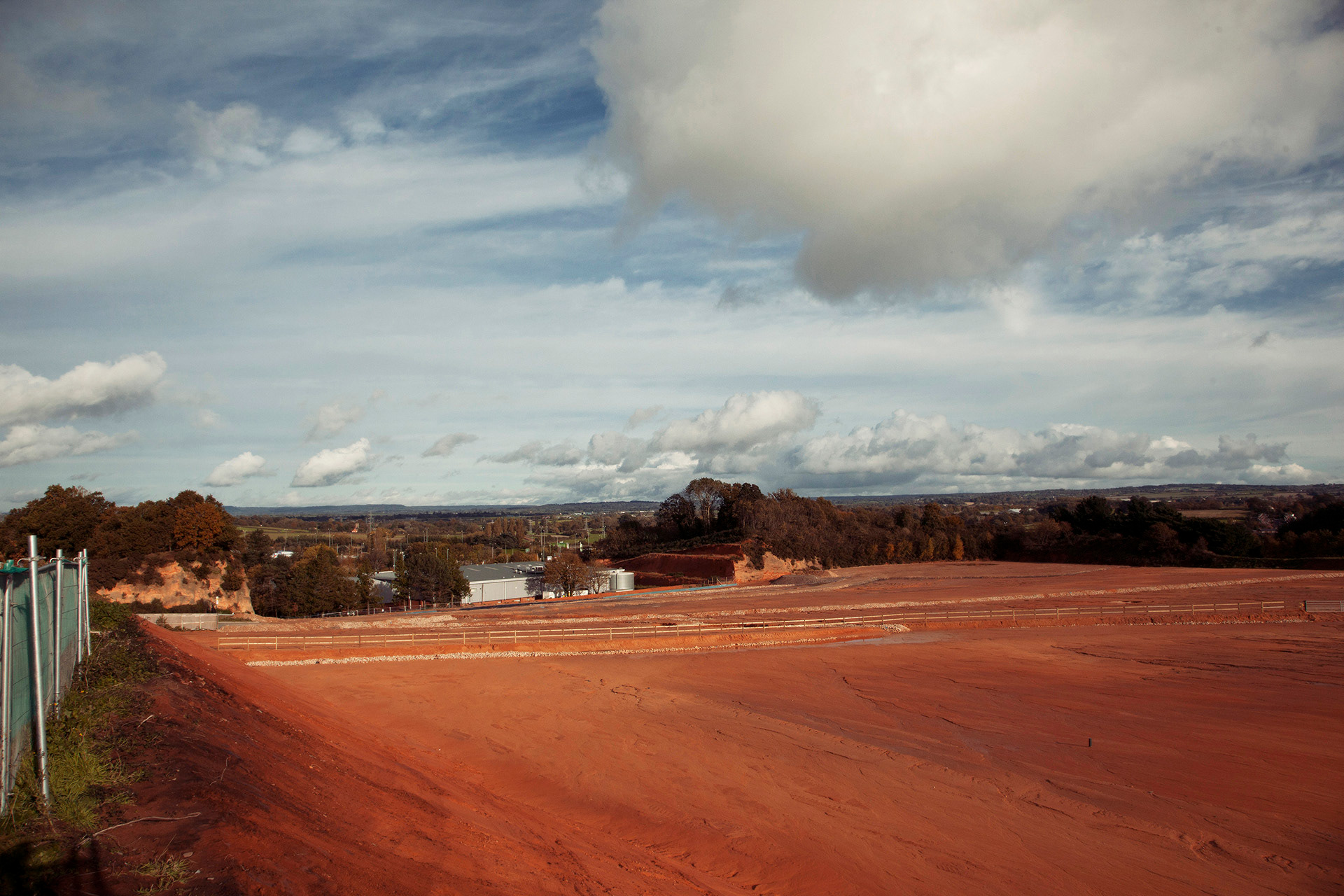
Reconnaissance Excursion #4: a sandstone development site on Exeter’s edgelands
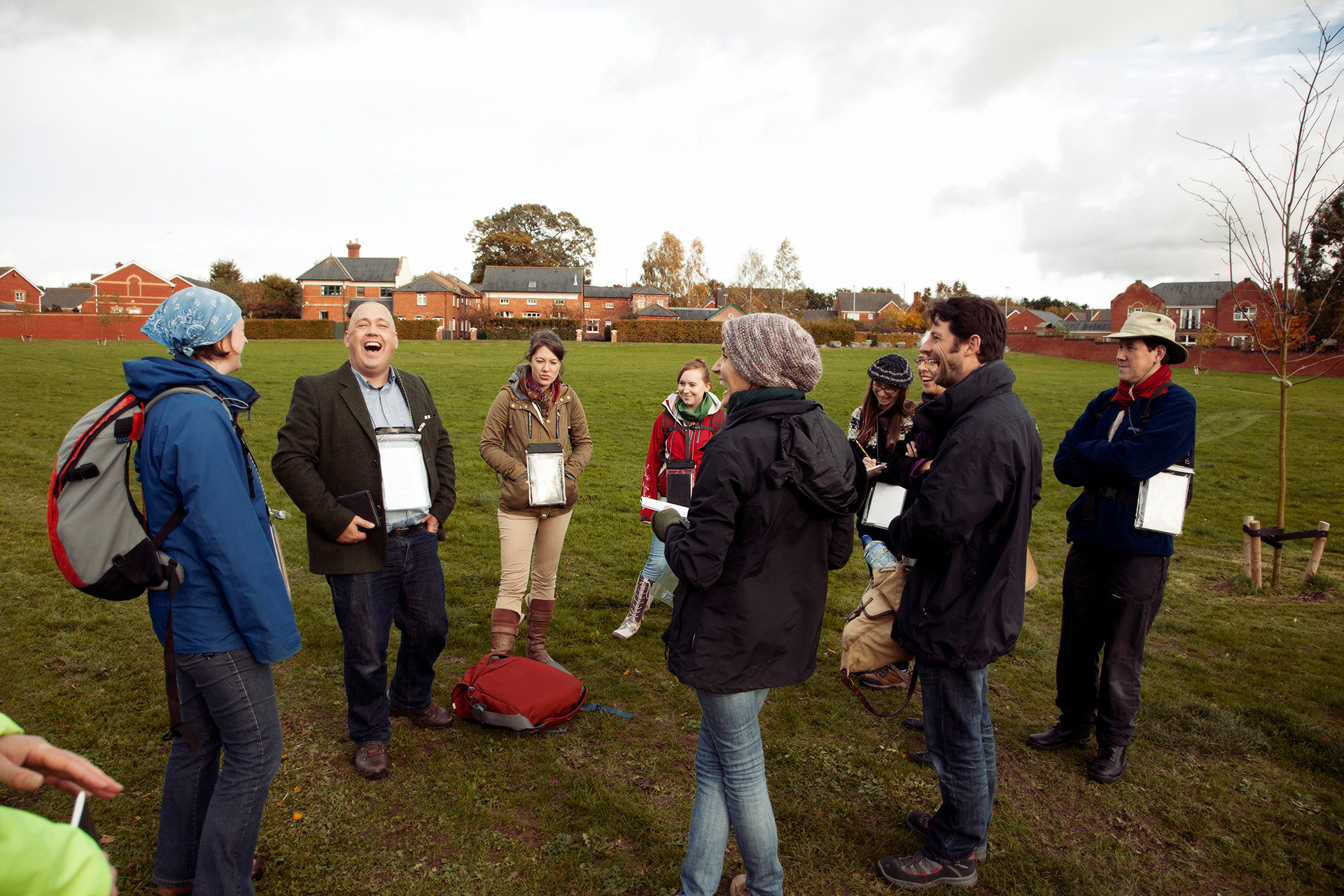
Reconnaissance Excursion #4: exploring desire paths and autotopology in the suburbs
Where to build the walls that protect us #2
A 'charrette' in search of a future Exeter (5 cities in 5 days)
After sifting through the 2013 reconnaissance material, this second, public-facing phase of the project took place over a week in September 2014. Rather than opting for a definitive Masterplan model as originally pledged, it was decided to take a more fluid, iterative approach. 5 cities in 5 days. Each day built from scratch. Each day catalogued. Each day just 1 possible Exeter.
Drawing heavily upon the first phase walking reconnaissance, the work intrigued and whetted the public imagination, interrupting a different public thoroughfare each day: next to the river, on the Cathedral Green, amid the shops, outside central railway station, in front of the library. Out front a precision-engineered 3D model of Exeter. Purely topological. For those with more time and interest, a deeper engagement could be had for the cost of one hour of time. Joining team members (Stephen Hodge, Matt Fletcher and Stuart Crewes) and relevant future-facing experts they listened, talked, identified issues and questions, drew provisional blueprint solutions, represented them in clay, and added them to the day's model. The week culminated in a 'Powered by PechaKucha' night at the Exeter Brewery.
Images: Robert Darch.

‘Terrain and climate’: purposeful encounters with the passing public on Exeter Quay

Choosing card-based stimuli during a model-making session
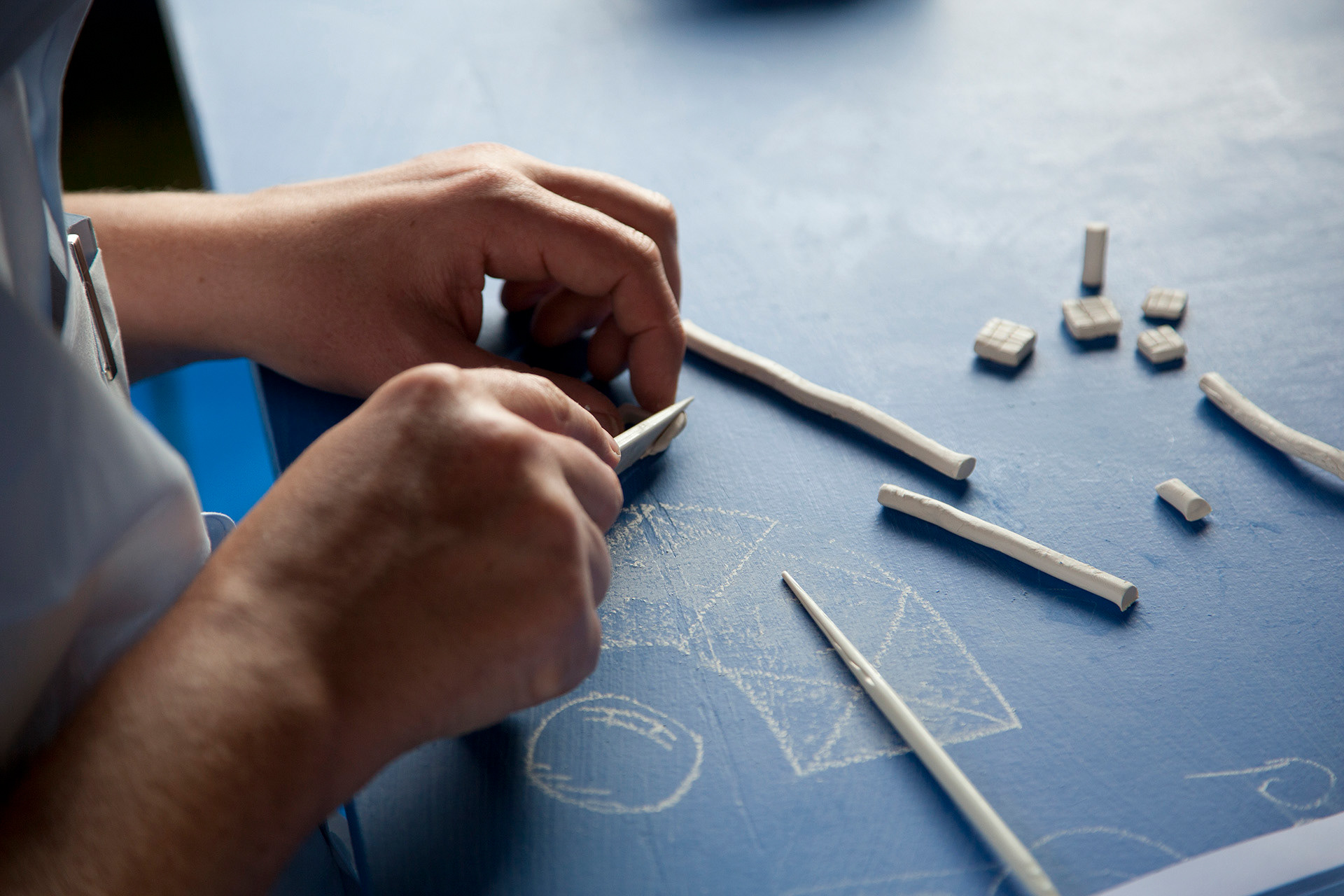
Crafting a clay model in the large gazebo

The day’s model city emerging on the CNC engineered topology of Exeter

A page from the ‘blueprint’ key, outlining the properties and function of one clay model

‘Buildings and the life between them’: positioning clay models on the Cathedral Green
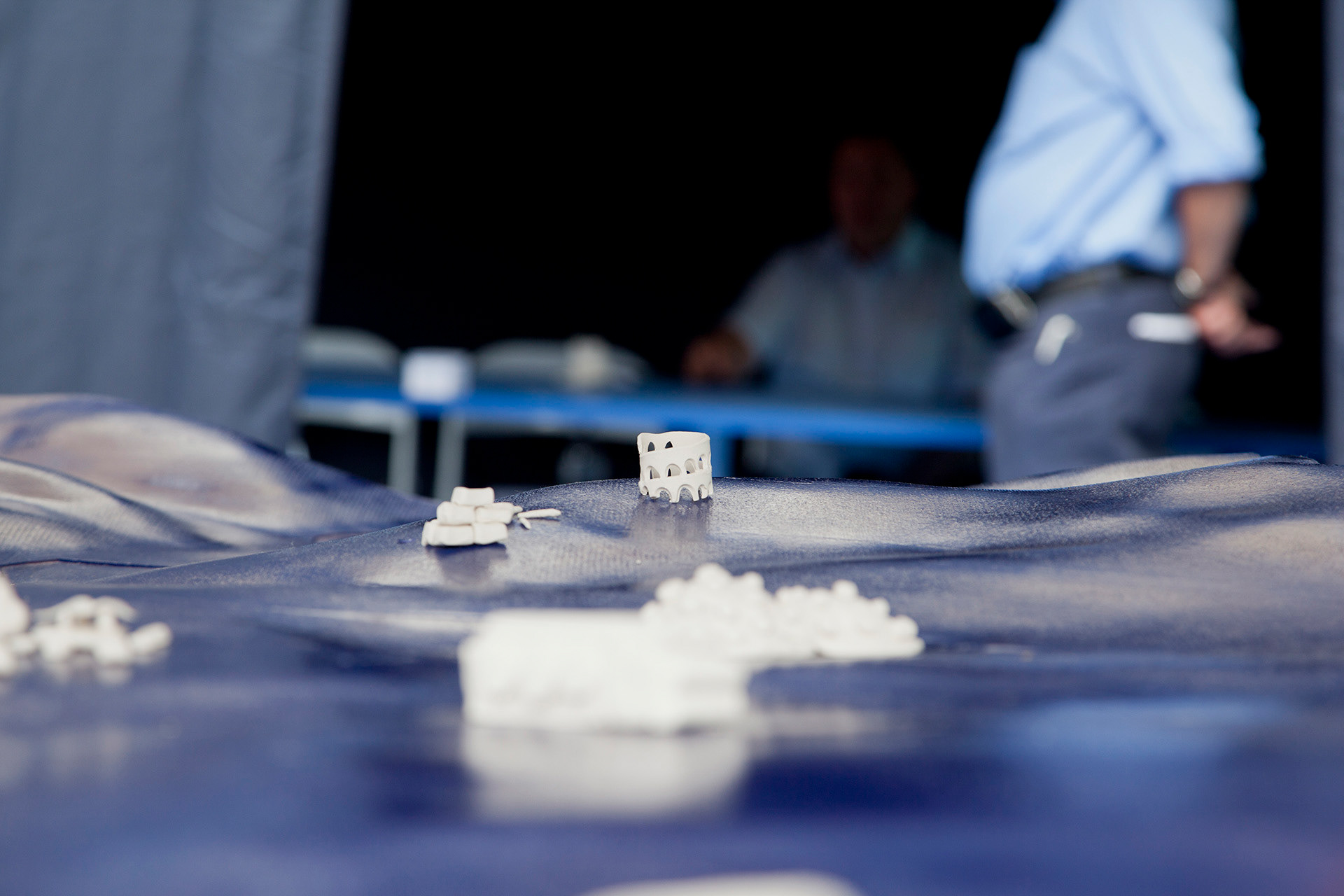
A view over the day’s model city towards the large workshop gazebo

A facilitated planning discussion in the large gazebo ahead of making clay models

Crafting tools and session brainstorming notes on the model-making table

‘Mobility and communications’: public encounters on Exeter Central Station forecourt
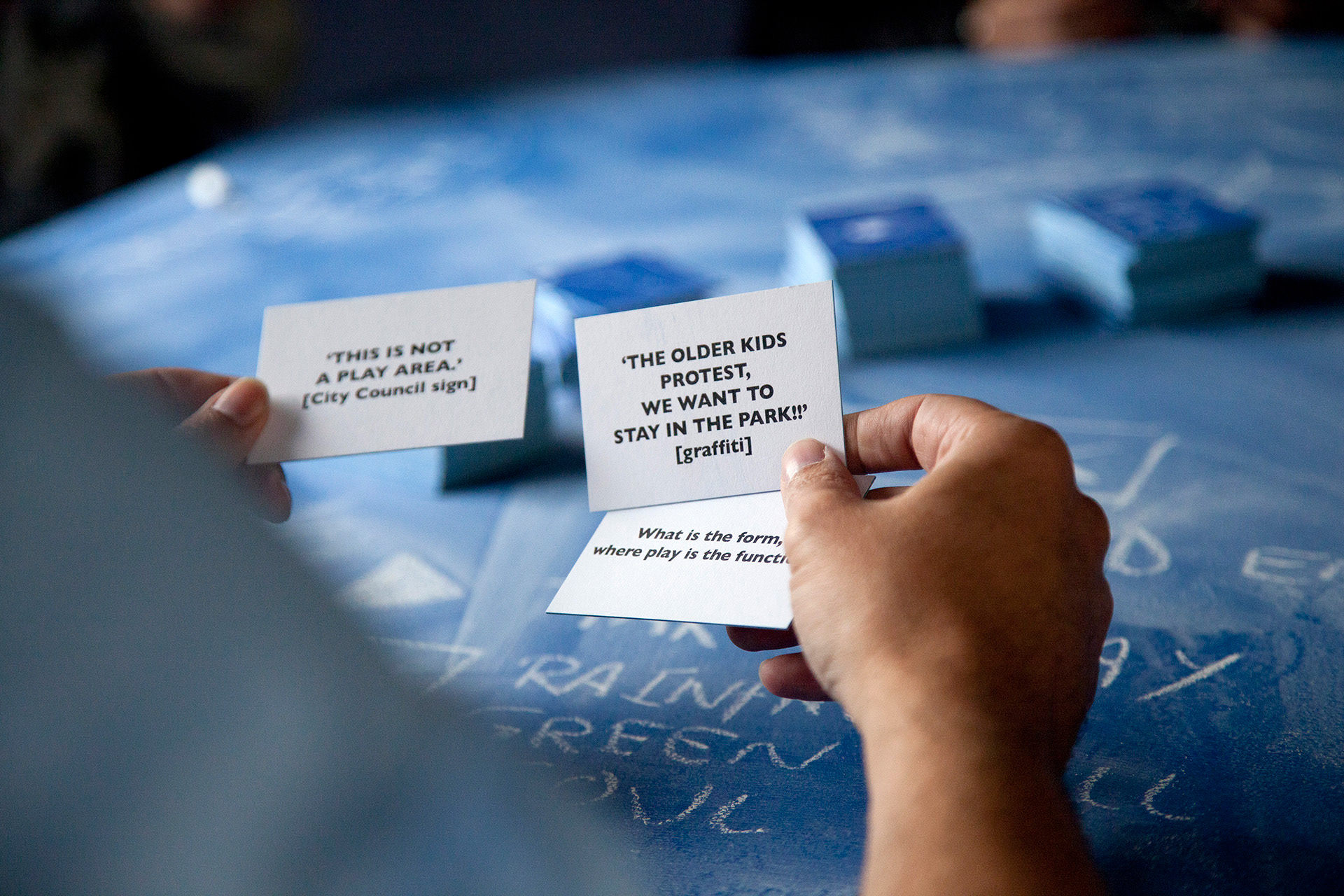
Discussing card-based stimuli during a model-making session

Crafting a clay model in the large gazebo

A clay model positioned between the River Exe and the canal
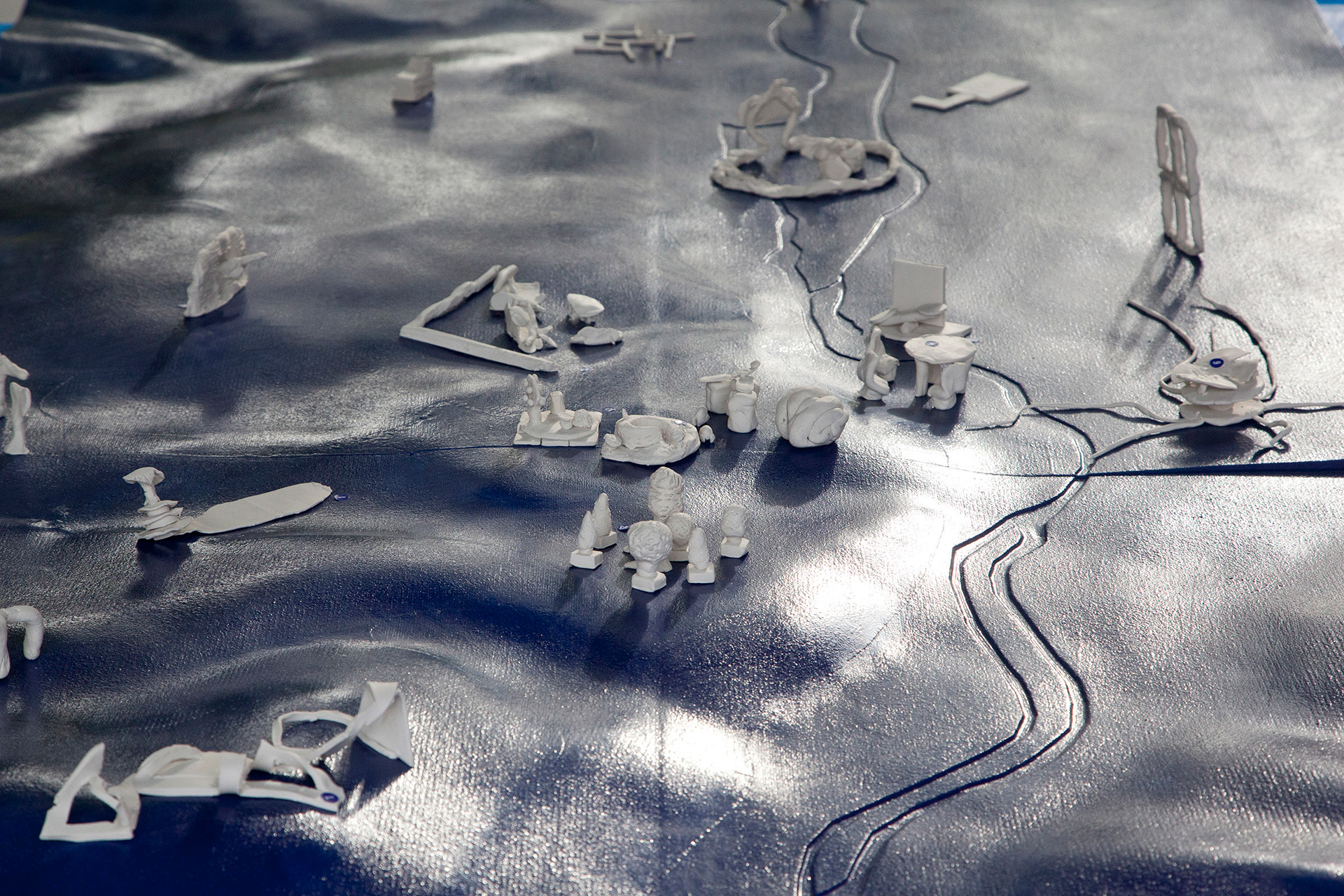
The day’s possible future Exeter emerging outside of Exeter Central Library

The audience listen to the closing PechaKucha provocations at Exeter Brewery
Where to build the walls that protect us #3
A 'charrette' in search of a future Leeds (8 x 90-minute excursions + model-building workshops)
This new iteration, commissioned by the 2016 Compass Festival, and presented with support from Playful Anywhere and Leeds City Council, combined themed excursions with city experts (a Leeds councillor, a data analyst, a social entrepreneur and an architect) and city model-making as one experience. It comprised eight 90-minute sessions (two for each of the four project themes). I was assisted by Matt Fletcher.
Images: Stephen Daniels.
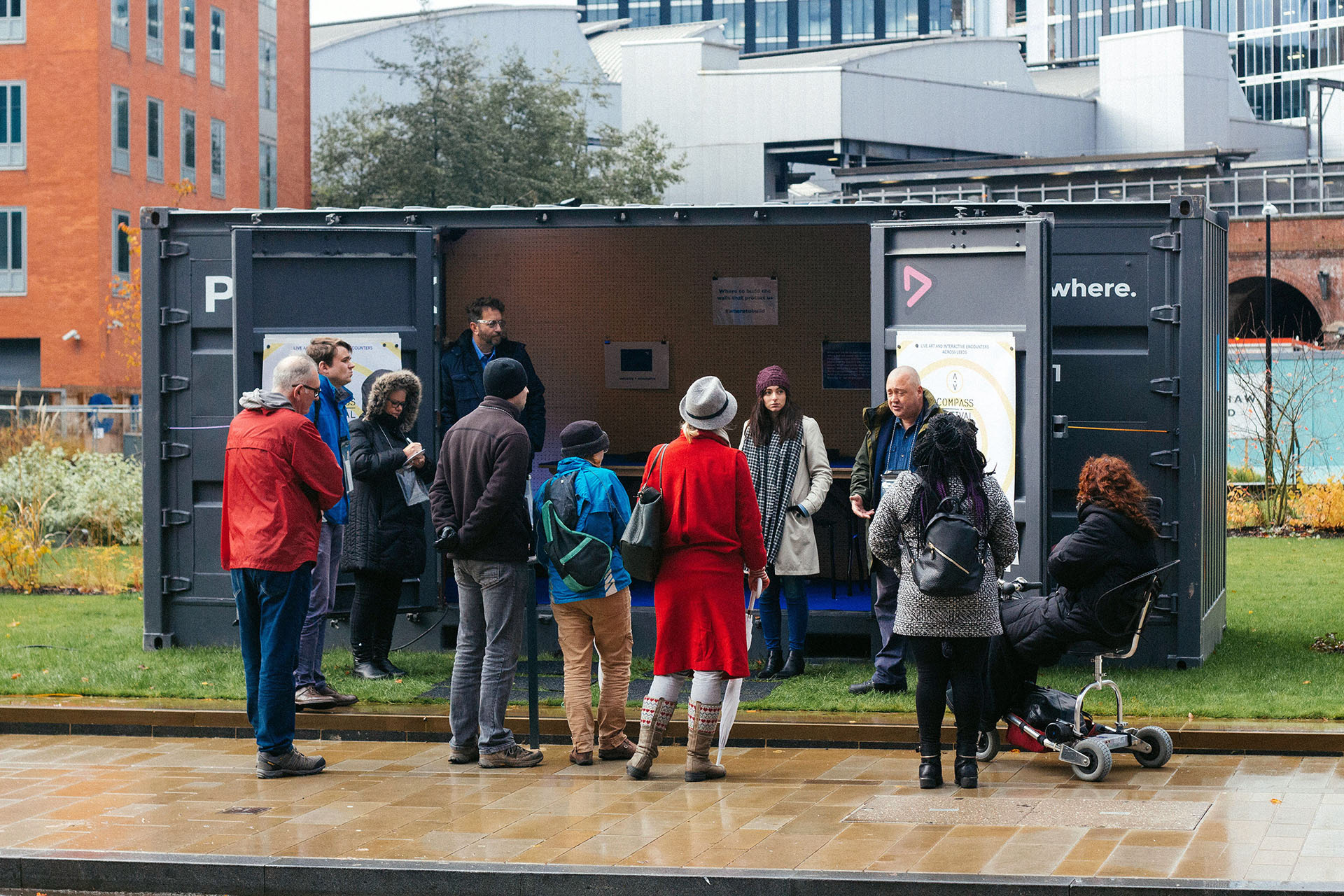
Participants gather outside the Playbox shipping container in Sovereign Square

Participants stop to listen to the River Aire running under the train station

Cllr Lucinda Yeadon reflects on the 2015 Boxing Day floods

A clay model placed on the 3D topological relief of Leeds

Data analyst Tom Forth talks about the importance of Leeds cloth halls with participants

Documenting an architectural anomaly in Leeds city centre

Discussion continues after one of the sessions

Pondering the regeneration of the South Bank with social entrepreneur Rob Greenland

Visiting the Grade I listed former Temple Works flax mill in Holbeck

A participant documents the emerging model of a possible future Leeds

Architect Simon Baker discusses ‘potent spaces’ on the north bank of the River Aire

A participant places a scale model of a human body within the fabric of the city

Close-up of a model figure on a mound of moss

One model of a possible future Leeds

The final model-making session comes to a close in Sovereign Square
Dissemination
In addition to the public exchanges that formed the core of the work, seven related papers and presentations were delivered between 2014-2019 in a number of academic and non-academic contexts: Bring The Happy (Invisible Flock/Kaleider/Met Office), Exeter Guildhall; Seeing Like A City, Queen Mary University of London; Intangible Histories Symposium, University of Exeter and the National Instite of Advanced Studies (Bangalore); Where to? Steps Towards the Future of Walking Arts, Falmouth University; Pedestrian Pathways in the Healthy City Symposium at the 52nd International Making Cities Livable Conference, Bristol; Interdisciplinary Approaches to Urban Resilience, University of Surrey; Walking's New Movements, University of Plymouth.
An interview with Dr Fiona Wilkie about the process of making the work was published in Victoria Hunter's book Moving Sites (Routledge, 2015). LINK
The following artist's pages were published in the 'On Drifting' issue of Performance Research (Routledge, 2018).
Images: Stephen Hodge.

Performance Research page #1

Performance Research page #2
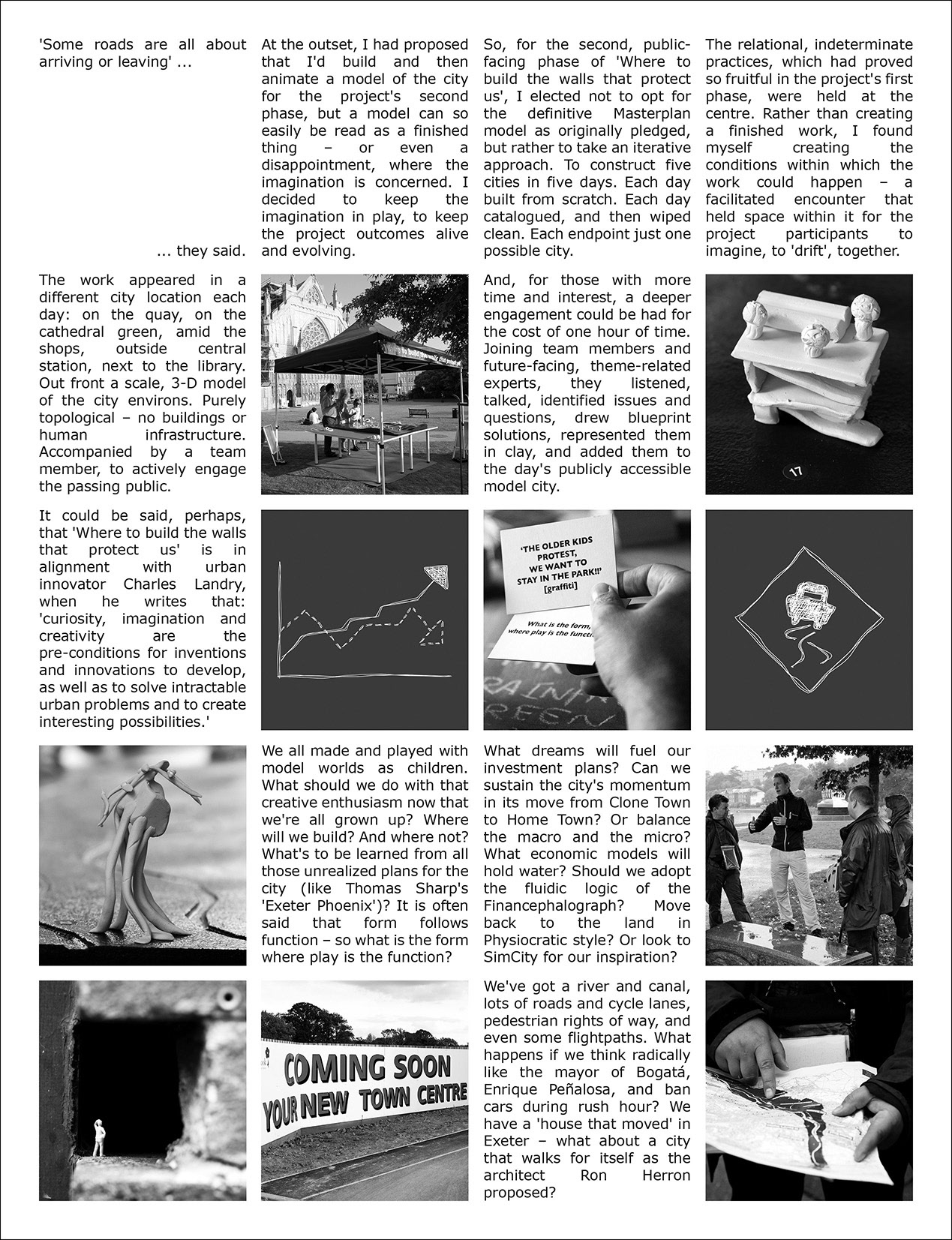
Performance Research page #3
TaPRA asides: Where to build the walls that protect us
Finally, the following five postcards (including links to four online audio files) were commissioned by the Theatre and Performance Research Association executive for the 2019 TaPRA Conference.
Images: Stephen Hodge.

TaPRA asides framing postcard: front

TaPRA asides framing postcard: back

TaPRA asides postcard #1: front

TaPRA asides postcard #1: back

TaPRA asides postcard #2: front

TaPRA asides postcard #2: back

TaPRA asides postcard #3: front

TaPRA asides postcard #3: back

TaPRA asides postcard #4: front
